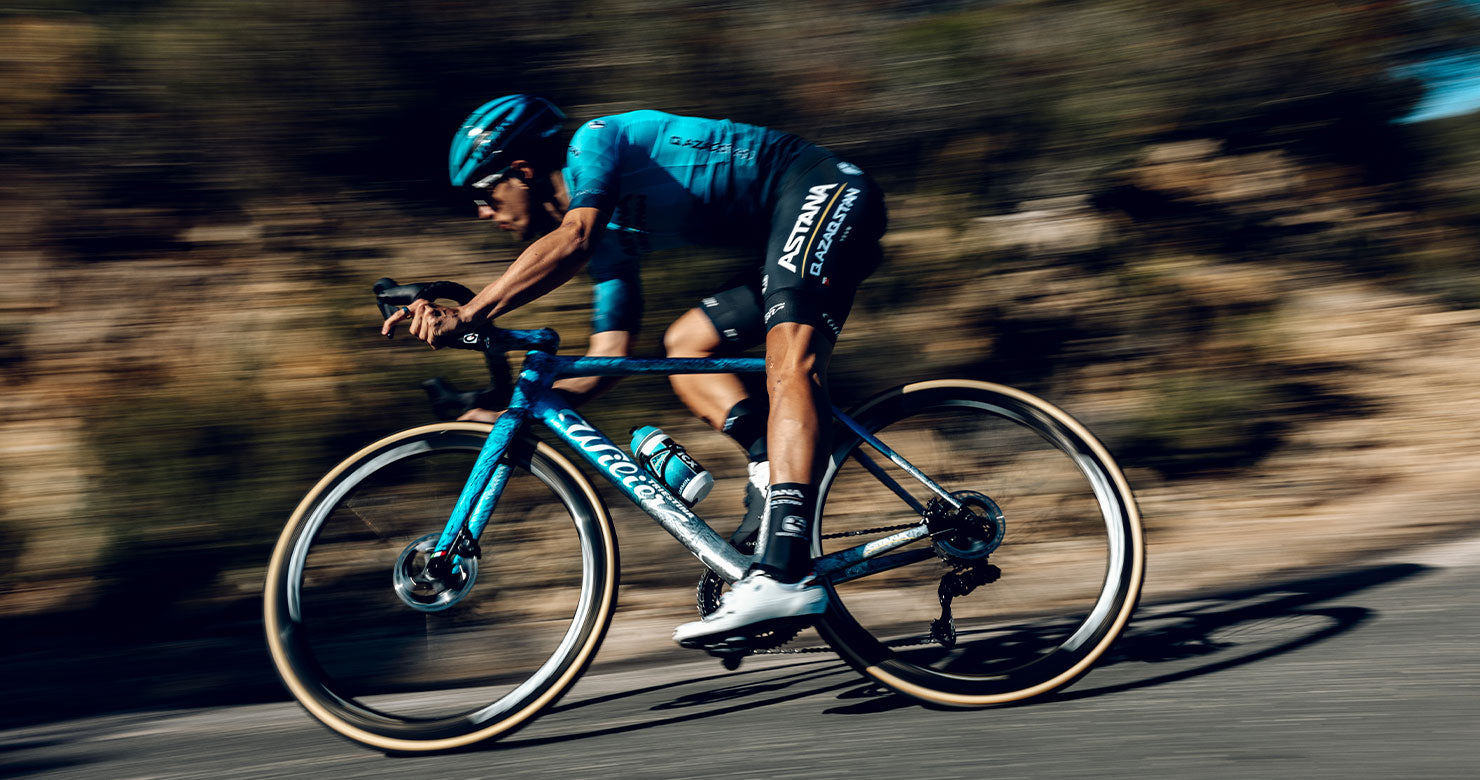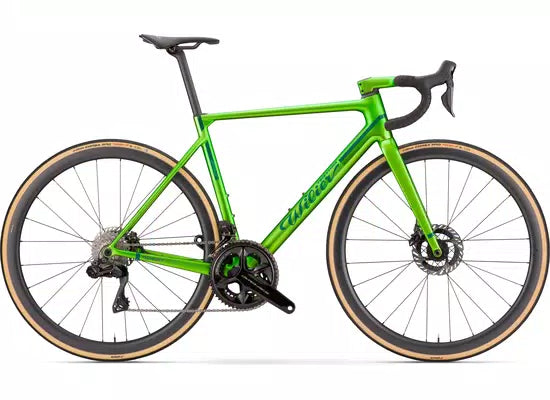


Our lightest bike ever
Lightness must be managed. Making a lightweight frame is relatively simple, but making one with top-notch performance and ride quality requires a strong heritage.
Verticale SLR is the best example of what we have been and what we do best: a racing bike that has improved the weight of the Wilier 0 SLR, the previous climbing model from Wilier, by almost 10% (9.73% on the kit consisting of frame, fork, handlebars and seatpost).
1623 g For Vertical SLR , 1798 g for 0 SLR.
Less weight, more responsiveness, better performance.
Verticale SLR is today the best calling card for Wilier, the new generation of the best Italian bicycle manufacturers.
Verticale SLR is the best example of what we have been and what we do best: a racing bike that has improved the weight of the Wilier 0 SLR, the previous climbing model from Wilier, by almost 10% (9.73% on the kit consisting of frame, fork, handlebars and seatpost).
1623 g For Vertical SLR , 1798 g for 0 SLR.
Less weight, more responsiveness, better performance.
Verticale SLR is today the best calling card for Wilier, the new generation of the best Italian bicycle manufacturers.
Carbon of excellence
When we talk about a climbing frame, the first thing we need to consider is the raw materials used. The use of the highest-quality composite materials is the starting point for creating a design entirely dedicated to top-level performance.
For the Verticale SLR, specifically, we used three types of fibers produced by Toray, a leading Japanese multinational carbon fiber manufacturer: T800, T1100, and M46JB. The first two feature extremely high breaking strength, while the latter has a high modulus, giving the frame excellent torsional stiffness.
For the Verticale SLR, specifically, we used three types of fibers produced by Toray, a leading Japanese multinational carbon fiber manufacturer: T800, T1100, and M46JB. The first two feature extremely high breaking strength, while the latter has a high modulus, giving the frame excellent torsional stiffness.
New Integrated V-Bar Fold
The handlebar is made of monocoque carbon and has a completely new design, weighing approximately 310 grams.
The first thing that catches the eye is the special shape with differentiated width of the handlebar. When viewed from the front, the high grip on the controls is narrower at the bottom. This shape was designed to provide concrete solutions to the needs of professionals, who season after season seek optimal aerodynamic solutions that remain within the rules dictated by the UCI.
The trend is to "go narrow," but still have a wider lower grip for greater maneuverability, a key requirement when sprinting. The overall delta between the upper and lower sections is 30 mm.
V–Bar, like the other monocoque folds in the Wilier catalogue, is also compatible with the other high-end models, it is available in 6 sizes , two with width 37/40 with 90 and 100 mm attachments, four with width 39/42 with 110, 120, 130 and 150 mm attachments.
V–Bar, like the other monocoque folds in the Wilier catalogue, is also compatible with the other high-end models, it is available in 6 sizes , two with width 37/40 with 90 and 100 mm attachments, four with width 39/42 with 110, 120, 130 and 150 mm attachments.
Integrated cycle computer holder
The search for overall weight reduction of the handlebar led us to develop a specific support (stick) for the cycle computer, made entirely of aluminium, which, unlike previous ones, fits completely into the handlebar bend.
The fixing takes place thanks to two through holes which have allowed us to further optimize the weight compared to previous models.
At the rear, near the handlebar stem/fork steerer tube, a different clamping system is used. The bolts engage two aluminum inserts, a solution that makes it easy to replace the clamping part and improves the distribution of forces on the composite part.
Closing the rear of the binding is a rubber insert to prevent dirt and sweat from entering the fold, thus preserving its reliability over the long term.
The fixing takes place thanks to two through holes which have allowed us to further optimize the weight compared to previous models.
At the rear, near the handlebar stem/fork steerer tube, a different clamping system is used. The bolts engage two aluminum inserts, a solution that makes it easy to replace the clamping part and improves the distribution of forces on the composite part.
Closing the rear of the binding is a rubber insert to prevent dirt and sweat from entering the fold, thus preserving its reliability over the long term.
Seatpost with integrated light or number
We have redesigned the seatpost with two possible setbacks: 0° and -15°, both equipped with two special holes for installing a rear light or for mounting race numbers.
New seatpost fixing system
We have taken the locking device to the extreme so that it no longer closes from above but diagonally.
This clamping system has allowed a reduction in weight at that point of the frame compared to the 0 SLR.
This clamping system has allowed a reduction in weight at that point of the frame compared to the 0 SLR.